Our purpose is to educate people in Yorkshire on the symptoms of ovarian cancer because we know that earlier detection prolongs lives. We’re asking women to advocate for their own health and understand when something isn’t right.
There is no current screening tool for ovarian cancer, that’s why it is so important that people with ovaries understand their bodies, clue themselves up on the symptoms and seek medical assistance if symptoms persist.
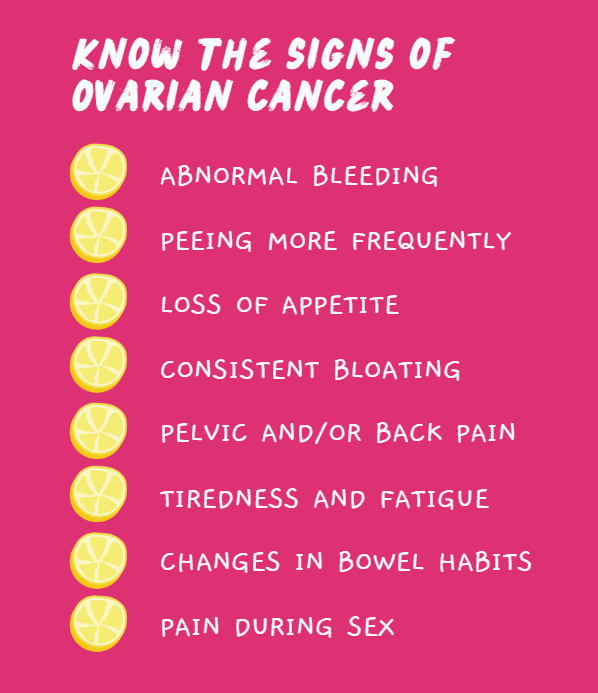
– Abnormal bleeding – Need to wee urgently/ more
– Persistently bloated stomach – Feeling tired & sluggish 24/7
– Changes in bowel habits – Pain during sex
– Difficulty eating – Feeling full quickly
– Pelvic/ abdominal pain – Unexplained weight loss
If you have experienced these symptoms persistently for more than four weeks, please visit your GP.
Other symptoms include:
- Unusual vaginal discharge and bleeding
- Cough and shortness of breath
- Burping and excessive wind
- Heartburn
- Gaining weight without a change in diet/ exercise
Most patients with ovarian cancer receive their diagnosis too late, at an advanced stage. Those aged between 15 and 39 with ovarian cancer have the highest survival rate, but often this age group believe they won’t be affected, and that ovarian cancer is an older person’s disease.
Anyone approaching a GP with symptoms may be sent for an ultrasound, as well as a CA125 blood test, which tests specifically for ovarian cancer. Doctors will particularly look to carry out tests for ovarian cancer in those aged 50 or over who have experienced symptoms of irritable bowel syndrome (IBS), within the last 12 months, because IBS rarely presents for the first time in women of this age.
You’re more at risk if…
– You have gone through the Menopause. More than 5 in 10 cases of ovarian cancer are in those over 65 years.
– You have a family history of ovarian cancer, as you may carry the mutated high risk BRCA1 or BRCA2 gene.
– You have had breast cancer in the past, as you may carry the mutated high risk BRCA1 or BRCA2 gene.
– You started your period at a young age (12 or younger)
– You are of Eastern European Jewish descent (as you are ten times more likely to carry the BRCA gene)
More information on ovarian cancer can be found here:
Cancer research UK: cancerresearchuk.org
NHS ovarian cancer overview: nhs.uk/conditions/ovarian-cancer