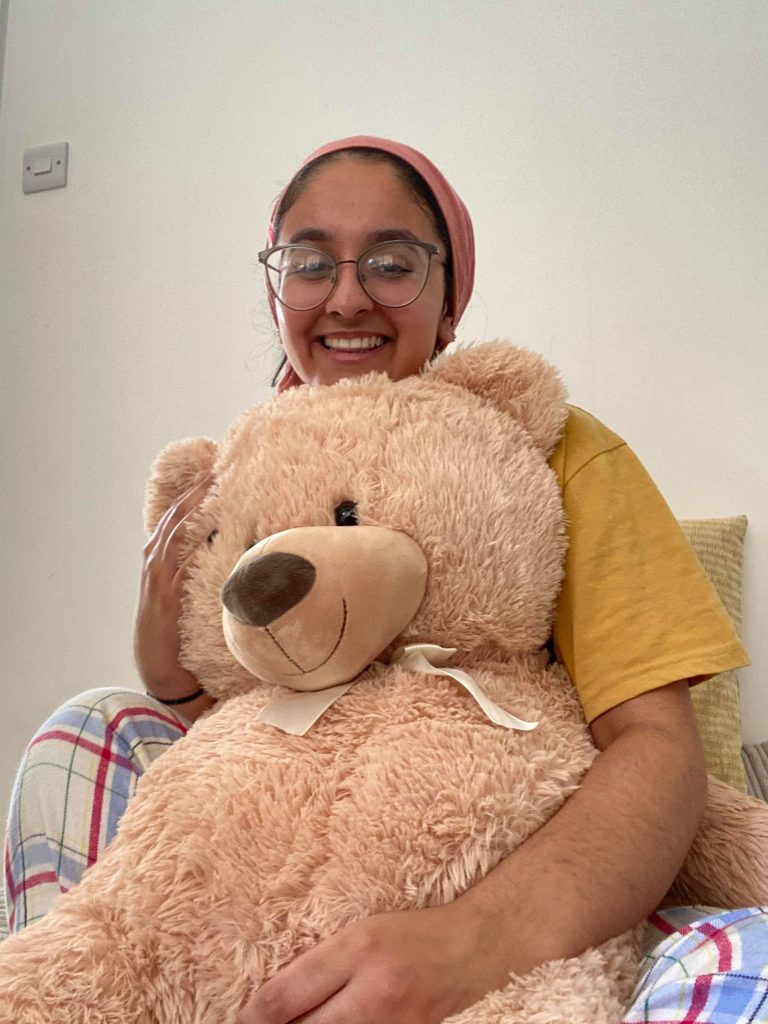
Aqsa Ahmed, 22, from Stoke-on-Trent
Tell us about your ovarian cancer journey, Aqsa
I started experiencing my ovarian cancer symptoms last year aged 20 and by the time I realised something was wrong, I was 21. I didn’t understand what was happening with my symptoms. The main thing I noticed was gaining unexplained weight around my stomach over the course of a year and I would get sharp pains every so often in my lower abdomen – this turned out to be in my ovaries. I’d heard of ovarian cancer because my grandma passed away with it in 2019. However, I had no idea of the symptoms and just assumed like many that it would not be something I’d ever have to deal with at the age of 21.
When I went to the doctors, I was told I had a huge ovarian cyst that needed to be removed, but ovarian cancer was never mentioned. I never even had any tests to check if I had ovarian cancer because doctors just thought it was too unlikely at my age. Other than my huge stomach, I had no other common symptoms associated with the disease.
Because of the cyst, by the time of my operation I had an extremely swollen and bloated belly which made me look around seven months pregnant. My cyst measured 19cm by 15cm – about the size of an A5 piece of paper.
I was never treated as a cancer patient until two weeks after my open surgery, as even after my surgery, the surgeon mentioned my ovarian cyst presented as benign. It was not until the pathology results came that I was diagnosed with Stage 1A high-grade cancer. For this reason, I was extremely lucky to never undergo chemotherapy as the surgery removed all traces of cancer.
Despite this, having had a vertical laparotomy and an incision which measured 20 cm long was challenging. There were moments of not being able to shower myself because of how invasive my surgery was, and I was unable to bend and reach my toes until a month after my operation.
My operation took place in the height of Covid-19, so I was not allowed any visitors and I lay in the hospital alone for 4 days. This was very difficult for my parents as they felt they couldn’t look after me or ensure I was okay.
I think the most difficult thing I experienced was being diagnosed with ovarian cancer after the hardship of my operation. My family and I assumed everything would be okay after the procedure, but things became more confusing and difficult when I was told I was NED (no evidence of disease).
Considering my grandmother passed away from the same cancer, my family found the news even more difficult to deal with as the loss of her and the seriousness of my diagnosis was amplified. However, I always think about how my cancer story is probably the easiest burden to bear, I know so many women who deal or have dealt with numerous rounds of chemotherapy and radiotherapy to cure their cancer. I was and still am incredibly lucky to have been diagnosed with the very first stage and be treated promptly before the cancer could spread.
What does the future hold for you?
The future is exciting for me. Even though I’m in remission and must have blood tests and three scans every month to ensure the cancer doesn’t come back, I’m making plans for the future. My diagnosis and recovery meant that my plans have been a bit delayed. I was on track to move to London with a scholarship for my master’s degree and a place at my dream university. I’m pleased to say this is still happening as I am now looking forward to enrolling on my course in September. I’m also excited about setting up an online crochet store while spending time with my loved ones!
What’s on your bucket list?
Seeing the Northern Lights, travelling to my ancestral home of Kashmir and visiting all of Egypt’s historic sights!
Do you have any coping mechanisms you can share with others that might be reading?
The key coping mechanism I found helpful was writing down questions, either on a cue card, notebook or just on my phone so I could remember what I wanted to ask when visiting the doctors. I also created a symptom diary which helped me keep track of my pains or my mass growth, so I could relay this to the doctor in a concise and accurate way. In terms of relaxing, my new hobby is crocheting, and I have found it super fun and mindful to do.
What would you like to see in the future for ovarian cancer awareness?
I think most women don’t know the initial signs of ovarian cancer despite how many women die from the disease each year. There has recently been a cancer awareness campaign by the NHS which featured the symptoms of ovarian cancer, but I hope more awareness is raised by GP’s and more widely within communities.
I would tell any women that are worried that they might have ovarian cancer to be assertive and upfront with doctors who may be sceptical about their symptoms. Ovarian cancer is hard to detect without adequate scans and getting referred for these are so important. Don’t feel like you’re being pushy or unreasonable, it’s important to rule out the possibility of ovarian cancer and ensure your safety. I was never offered a CA125 despite my symptoms and history within my family. Being aware of the signs is very important.
Lemonade would like to thank Aqsa, we really enjoyed chatting with you and wish you the best of luck in the future.
If you would like to find out more about her journeyread her personal blog here >


