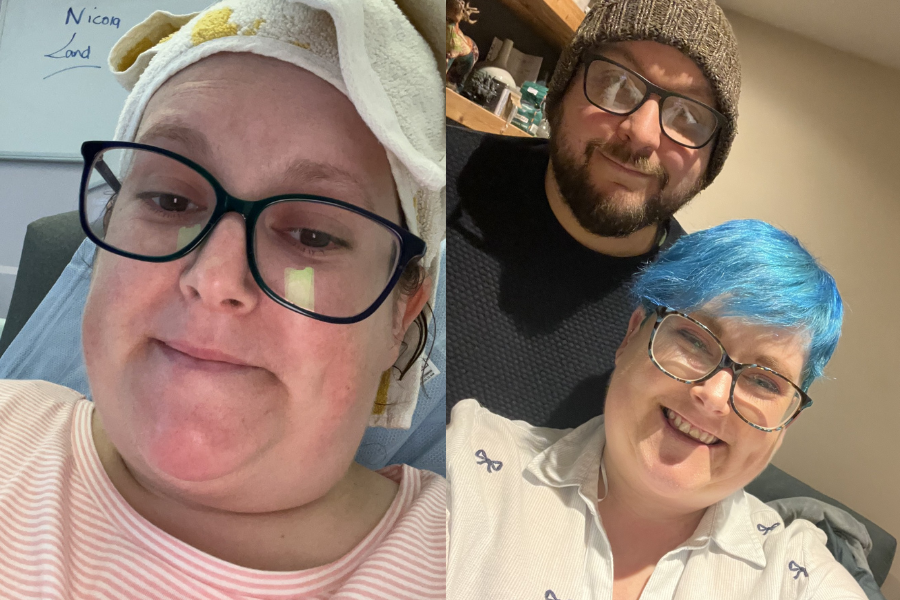
For a long time, Nicola Land was told the symptoms she was experiencing were a result of colitis (chronic inflammation of the inner lining of the colon and rectum). One day, everything changed and so began her ovarian cancer journey. From the fear and pain, Nicola found strength and resilience through the support of others…
Lemonade: Tell us a bit about yourself Nicola and your ovarian cancer journey.
Nicola: I’m a Nursery Manager from Huddersfield and have been working in childcare for over 20 years. I have a love for crafting and learning new skills as well as shopping and being outside in nature! The day everything changed, I had been at work all day. Every time I bent down and stood back up, I felt a sharp nipping pain in my groin. It didn’t feel normal, so I booked a GP appointment.
For a long time, my symptoms were blamed on colitis. The bloating. The discomfort. The pain. It was always “just your colitis.”
By the time I was seen, the shutters at the surgery were coming down. The doctor examined me and said, “I’m a little concerned. You need to go to hospital – A&E, day surgery.” I went alone.
After hours of waiting, a doctor examined me and said, “I think you have a hernia. You’ll need a CT scan.” I remember Googling hernias and feeling slightly reassured. Then I was called in again. “Are you here by yourself?” the doctor asked. “Yes,” I said. He drew a triangle and a circle on a scrap piece of paper. “This is your uterus,” he said. “I think it’s cancer.” Just like that. No warning. No preparation. Just a drawing and a word that shattered everything.
The days that followed were filled with waiting. Waiting for ultrasounds. Waiting for calls that didn’t come. Sitting in hospital wards for hours with no answers. Being told they couldn’t tell me anything until a specialist reviewed it. When I rang one of the numbers I’d been given and heard the words “Macmillan,” my heart broke. I knew.
The call finally came: “There’s a mass attached to your ovary. We think it’s cancer.”
I ran to the bathroom and was physically sick while the doctor stayed on the phone. My partner listened helplessly as I vomited from shock. Then everything moved fast. Urgent MRI. X-ray. Fertility appointment. Oncology appointment.
At 35 years old, I was told there was no time. No chance for me to have children. My operation was already booked. While giving notice for our wedding, I was preparing for life-saving surgery. I remember sitting in the gynaecology outpatients at Calderdale, only to find out we were supposed to be at the Macmillan unit. Phones were ringing around us – they were trying to find me. I felt hunted by my own diagnosis.
After surgery, I felt stripped of dignity. Vulnerable. Needing help to wash and dress at 35 years old. I barely recognised myself. Before I could even begin chemotherapy, I developed E. coli from the operation. My wound wouldn’t heal. I suffered nerve damage in my leg and foot. I needed a Zimmer frame to walk. I had to relearn how to put pressure on my heel and toes. This is what cancer looked like for me. Not just the illness – but the trauma, the loss, and the fight to rebuild. And I’m still here!
Lemonade: You are so brave, Nicola. What kind of coping mechanisms have you had in place following your diagnosis and throughout your journey?
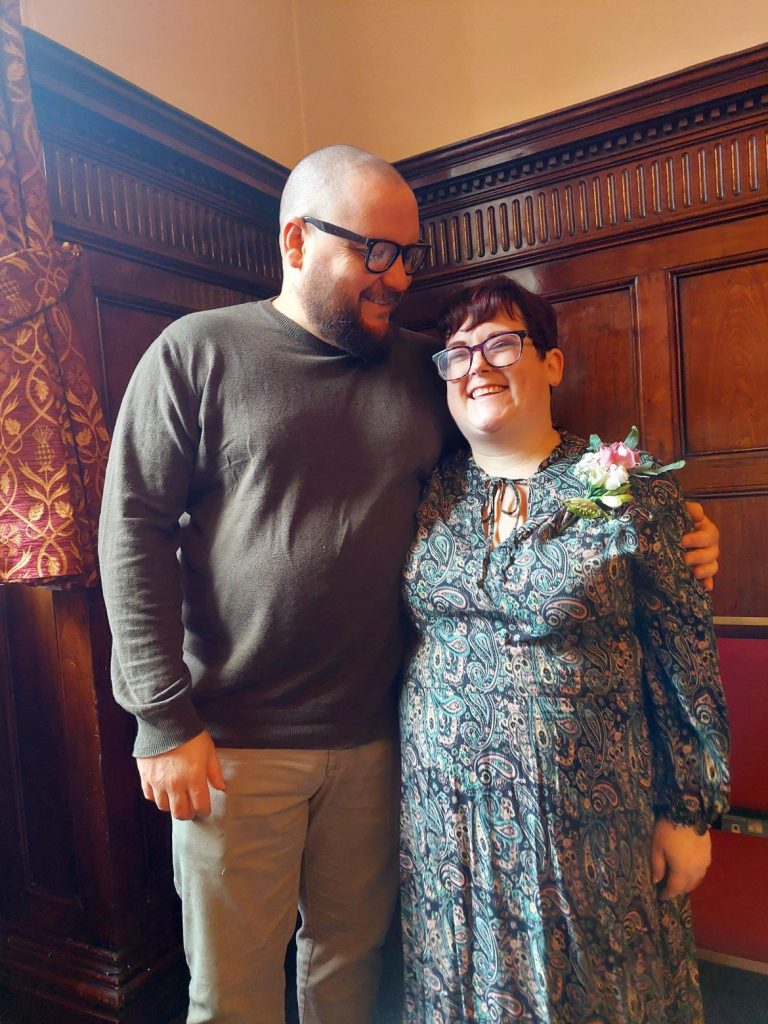
Nicola: Cancer wasn’t just the diagnosis. It was the waiting, the loss of fertility, the loss of independence, the complications and the fear. But it was also my partner – now my husband – holding my hand in every waiting room. My mother-in-law showing up without question. My friends rallying around me.
It’s really important to spend time with those who show up for you. The ones who sit in waiting rooms. The ones who answer the phone. The ones who hold your hand when you’re terrified. They are your people – let them in. I was terrified. I was broken. But I was never completely alone.
When your strength comes from your husband, your family, and your friends, that tells me something important: you value depth over surface. You value shared laughter, real conversations, inside jokes, support during hard days, and celebrating wins together.
Remember to rest when you can. Healing takes time – often far longer than we expect. Your body has been through trauma, surgery, treatment, and shock. It deserves patience. Trust that your body will heal in its own time. Try not to pressure yourself to “get back to normal.” There is no rush. There is no timeline you have to meet. Be gentle with yourself. You are healing. And that is enough.
Lemonade: How has your life changed as a result of your diagnosis?
Nicola: My life has changed so much. There have been many hardships, challenges I never imagined facing at 35. There are long-term health issues I continue to live with every single day. But there have also been joyful times. There have been beautiful memories made. There has been love, laughter, and strength I didn’t know I carried.
I am deeply grateful for the lifesaving treatment I received. Grateful for the doctors and nurses who acted quickly. Grateful that I am still here. Still here. Still loved by my husband. Still active. Still achieving in my career. Still building a life that looks different – but is no less meaningful. Cancer changed my life. But it did not end it and I live in hope.
Lemonade: Amen! So let’s talk about now. Where abouts are you now in your ovarian cancer journey?
Nicola: I’m three years cancer-free which is huge! That is strength. That is resilience. That is something to honour. And at the same time… living in fear after cancer is incredibly real for me and I know it is common. You don’t just “move on.” Your body remembers. Your mind remembers. Every ache can feel suspicious. Every scan can feel like a cliff edge.
Lemonade: What advice would you give to other women who may be facing ovarian cancer or seeking a potential diagnosis?
Nicola: If something doesn’t feel right in your body or your life, it’s worth paying attention to. We’re often conditioned to downplay symptoms, ignore stress, or avoid “bothering” professionals – but intuition combined with action is a strong form of self-respect. If symptoms persist, worsen, or feel unusual for you, push for clarity. It’s okay to ask follow-up questions to doctors and ask for a second opinion. It’s okay to say, “I don’t feel heard.” Your health -physical and mental – is not an inconvenience. Advocating for yourself doesn’t make you dramatic. It makes you responsible for your well-being.
I am not just someone who had cancer. I am someone who survived it. Someone who rebuilt. Someone who found light in the darkest chapter. And if I can find hope there, so can you.
Lemonade: Speaking of hope, tell us about something you are currently looking forward to
Nicola: Making more quality memories with family and friends. What I’ve learnt is that doesn’t necessarily require big trips or grand gestures. It’s usually about intention. And I intend to continue creating small traditions, saying things I think but don’t always say to the people I love. Not just capturing moments but fully living them.
Lemonade would like to thank Nicola for sharing her story and helping us raise awareness.


